
Ebook When One Religion Isn't Enough: The Lives of Spiritually Fluid People, by Duane R. Bidwell
Those are some of the benefits to take when obtaining this When One Religion Isn't Enough: The Lives Of Spiritually Fluid People, By Duane R. Bidwell by on the internet. Yet, exactly how is the method to obtain the soft data? It's really appropriate for you to see this web page due to the fact that you can get the link web page to download guide When One Religion Isn't Enough: The Lives Of Spiritually Fluid People, By Duane R. Bidwell Just click the link provided in this post as well as goes downloading. It will certainly not take significantly time to obtain this book When One Religion Isn't Enough: The Lives Of Spiritually Fluid People, By Duane R. Bidwell, like when you need to go for book shop.
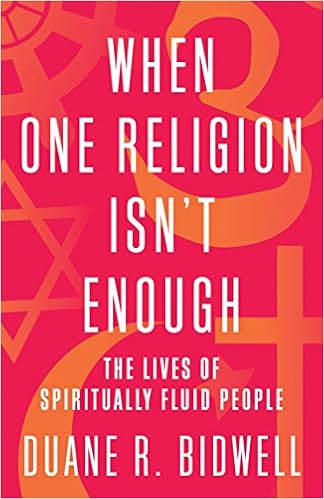
When One Religion Isn't Enough: The Lives of Spiritually Fluid People, by Duane R. Bidwell

Ebook When One Religion Isn't Enough: The Lives of Spiritually Fluid People, by Duane R. Bidwell
That's it, a book to await in this month. Also you have wanted for long time for launching this book entitled When One Religion Isn't Enough: The Lives Of Spiritually Fluid People, By Duane R. Bidwell; you may not have the ability to enter some stress. Should you walk around as well as look for fro the book till you truly get it? Are you certain? Are you that totally free? This condition will certainly compel you to always wind up to obtain a publication. And now, we are pertaining to give you superb solution.
Awaiting releasing this publication is no matter. It will not make you really feel burnt out as exactly what you will certainly feel when awaiting somebody. It will certainly have plenty of inquisitiveness of how this book is expected to be. When waiting a favorite publication to review, one feeling that typically will happen is curious. So, what make you really feel so interested in this When One Religion Isn't Enough: The Lives Of Spiritually Fluid People, By Duane R. Bidwell
Those are several of the perks to take when obtaining this When One Religion Isn't Enough: The Lives Of Spiritually Fluid People, By Duane R. Bidwell by online. But, how is the way to obtain the soft documents? It's very ideal for you to see this page due to the fact that you can obtain the link web page to download and install the publication When One Religion Isn't Enough: The Lives Of Spiritually Fluid People, By Duane R. Bidwell Just click the web link given in this article and goes downloading. It will not take much time to obtain this e-book When One Religion Isn't Enough: The Lives Of Spiritually Fluid People, By Duane R. Bidwell, like when you have to go for publication establishment.
In this instance, just what should do after getting this site is so straightforward? Locate the web link and also take it as your referral to visit the web link of guide soft file. So you can get it perfectly. This publication offers an impressive system of exactly how the book will certainly influence the presence of the life framework. When One Religion Isn't Enough: The Lives Of Spiritually Fluid People, By Duane R. Bidwell is a way that could reduce your lonely feeling when remaining in the lonesome extra time.
Review
“Will appeal to spiritual readers seeking an understanding and affirmation of the growing multireligious movement. Strongly recommended for libraries of all types.”—Library Journal, Starred Review“The book operates with great sensitivity and awareness, addressing the difference between spiritual fluidity and spiritual bypassing or cultural appropriation . . . inspiring reading for anyone interested in enlivened spirituality or seeking permission to embrace their complexities.”—Foreword Reviews“This groundbreaking book is essential for anyone who wants to understand the contemporary religious landscape. Duane Bidwell’s work will now become a touchstone for academics, clergy, therapists, journalists, and all of us who participate in more than one religion. Bidwell offers up richly detailed personal stories told with great sensitivity. In telling these stories, this book documents spiritual fluidity as transgressive yet also life-giving, and as important and surprisingly common rather than marginal and exceptional.”—Susan Katz Miller, author of Being Both“Amid the growing academic, and often dissonant, conversations about multiple religious belonging, Duane Bidwell offers a fresh and clarifying voice. He invites ‘spiritually fluid people’ to speak for themselves. His analysis follows, and is subordinate to, a careful listening to them—and it results in new insights into what multiple belonging feels like, how it happens, and the difference it can make in one’s life. Highly recommended for both academics and seekers.”—Paul F. Knitter, author of Without Buddha I Could Not Be a Christian“For all those who deeply long for an abundant life, and who know such thirst cannot be quenched by the constraints of religious monogamy, this book is a must-read. When One Religion Isn’t Enough speaks not only to those who deeply consider the sociopolitical ramifications of religious openness but to those who feel that being religiously faithful and spiritually deep can mean being open to more than just one religion.”—Isabelle Noth, professor for spiritual care, psychology of religion, and religious education, University of Bern, Switzerland“In this sharply insightful and refreshingly readable work, Bidwell takes us on an absorbing journey into the rapidly expanding world of religious fluidity. Simultaneously, he provides support and guidance to those embarked on this journey, while illuminating the rich potentials. In these times of increasingly fluid identities, the implications are legion.”—Kenneth J. Gergen, author of Relational Being: Beyond Self and Community“Bidwell, who is himself Buddhist-Christian, weaves tenderly crafted narratives and exercises the disciplines of silence and attention, practices that both traditions recognize as holy, in order to listen carefully to those who live with multiple religious belonging. The result: you cannot dismiss what elicits respect and even reverence. He shows that spiritually fluid lives may not have the intellectual consistency required by certain elite theologians fixated on doctrinal consistency, but these are nonetheless deeply considered lives marked by profound faithfulness and integrity. This learned book is the product of decades of intimate living with and listening to the religiously multiple; no one interested in the subject can afford to ignore it.”—John Thatamanil, author of The Immanent Divine: God, Creation, and the Human Predicament“Exploring religious multiplicity through the prism of experience, Duane Bidwell breaks fresh ground in this landmark work. Deeply attentive to the interstitial spaces in which religious multiplicity is shaped, the rarity of this book lies in the intricate, intimate, and insightful manner in which Bidwell captures the interplay of the sacred, the social, the familial, and the cultural in the lives of those who embody religious multiplicity. Outstanding and indispensable, this is a book that all those interested in the study of religion cannot afford to bypass.”—Rev. Dr. Peniel Jesudason Rufus Rajkumar, coeditor of Many Yet One? Multiple Religious Belonging
Read more
About the Author
Duane R. Bidwell, PhD, is professor of practical theology, spiritual care, and counseling at Claremont School of Theology, Claremont, California. A clinical fellow of the American Association of Pastoral Counselors, Duane has been a chaplain, pastor, counselor, and nonprofit director. Currently, he sits on the board of the Taos Institute and maintains a small clinical practice at the Clinebell Institute for Pastoral Counseling and Psychotherapy in Claremont. Both Buddhist and Christian, he lives in California with his wife, son, and dog.
Read more
Product details
Hardcover: 200 pages
Publisher: Beacon Press (November 13, 2018)
Language: English
ISBN-10: 0807091243
ISBN-13: 978-0807091241
Product Dimensions:
5.7 x 0.7 x 8.8 inches
Shipping Weight: 13 ounces (View shipping rates and policies)
Average Customer Review:
4.0 out of 5 stars
5 customer reviews
Amazon Best Sellers Rank:
#394,366 in Books (See Top 100 in Books)
The audience for this book seems to be academic students of religion, rather than spiritual seekers or general readers. The varieties of what the author calls "fluidity" are analyzed and described at length, along various axes. He describes six degrees of "bonds" between different religions; and three different sources of fluidity: choice, receiving (typically in a mixed marriage), and collaborating. I won't attempt to explain these here. He explicitly rejects the notion that all religions say the same thing at bottom (ekam sad vipraa bahudhaa vadanti, as the Rig Veda says), but cheerfully accepts the paradox that one can believe more than one thing at a time, like the White Queen in Alice.The book is thought-provoking, perhaps more for what it doesn't say than for what it does. Underlying the issue of fluidity is the question of just what a "religion" means, exactly. Is it a set of beliefs about one or more powerful supernatural beings who take an interest in human affairs? (though Buddhists, many Jews, and most Unitarians wouldn't agree). Or is it a group of like-minded people who encourage (or try to compel) others to follow their moral or social or political views (usually on the right, but sometimes on the left, e.g. Quakers)?And then there's "civil religion" (saying "God Bless America" or putting In God We Trust on the money, etc.), which doesn't require any actual supernatural beliefs but just associates oneself with a national tradition. It's probably a safe bet that many members of Congress are in fact atheists, but since polls tell us that voters are more likely to vote for a child molester than an atheist, it's hard to find anyone in Congress who doesn't list SOME religion! And then there are the Christians who cheerfully unroll their yoga mats, unaware that they are practicing Hinduism. Is this fluidity?Anyhow, this is a book which will appeal to those with an academic or even a casual interest in how religions work, and how one can identify with (or practice) more than one at a time.
I requested this book because I know many people who find themselves involved in two or more religions, and many families with members belonging to different religions. The author, Duane Bidwell, deserves credit for bringing the notion of spiritual fluidity to a mainstream audience.The book seems to be the first on the topic, which creates special challenges. One of the biggest challenges relates to terminology and the author's well aware of the problem. The term "spiritually fluid" doesn't seem to have a universal meaning; fluidity suggests an identity that's in flux, yet he's not really addressing change. It's really about people who have two or more religious identities, such as Catholic and Buddhist. The author contrasts fluidity or "exceptional" spirituality with "normal" or "normative" spirituality. The term "normal" can come across as somewhat judgmental; normative works better as sociologists talk about normative ages. He's really talking about norm relative to particular societies. We should remember that the notion of a single religion was foreign to some of the ancient societies; I'm not a religious scholar, but I've read that some religions appropriated Christianity as just another god. In fact, some scholars have suggested that the Judaeo-Christian bible sometimes shows God as being "first" among gods, not "only."The book could have used a stronger editor to organize the content into meaningful chapters. After introducing the concept, Bidwell seems to have organized the chapters based on the way people arrive at spiritual fluidity: choosing, receiving or collaborating. In other words, did they seek out another religion or did they inherit a mixed tradition from their parents? The collaborative path is, as he says, difficult to understand because "language can only approximate the experience."But when understanding fluidity, what is most important to understand? Bidwell differentiates his book by promising to explain the day-to-day experience of fluidity. Along those lines, it would seem most helpful to identify the most successful ways to embrace multiple identities. For instance, some people who convert from one religion to another will feel instantly at home in the new religion and never look back -- a sort of sequential fluidity ; others incorporate their former religion into the new one, achieving a sort of synthetic fluidity. What kinds of participation lead to meaningful experiences, personal well-being and family closeness? What leads to confusion and chaos? size.If that distinction isn't meaningful, it seems we could characterize fluidity by how people integrate multiple religions. Some people celebrate both traditions; some practice differently in different places; some integrate one religion into the way they experience another. There's a reference to a man who converted from Judaism to Christianity yet continues to support his children in their practice of Judaism.Within the chapters, the topics tend to be, well, fluid. For instance, in the chapter on Receiving, the author includes a story of how his role changed as needed in response to specific situations.The best parts of the book come in the chapters on A Field Guide to Spiritual Fluidity and Observations, Implications and Provocations. The author observes that "spiritual fluidity's greatest gift to religion -- and by extension to human flourishing" could be the shift from analytical thinking that emphasizes difference to synthetic thinking that creates a gestalt (I'd say synergy) where the whole is greater than the sum of the parts. He also notes that mono-religious choices might ultimately be marginalized, as more and more people participate in more than one religious tradition. The author's comments on "affinity" are particularly insightful; he feels an affinity for the desert, though he grew up in the country. John Denver's lyric "coming home to a place he'd never been before" recognized this possibility.Future writers on this topic might note that as a society, we're becoming more fluid in other ways. We speak of gender fluidity; many of us know people who've gone from heterosexual to homosexual relationships and/or vice versa. We speak of change and identity shifts. We rarely live in the same place all our lives; regional identity can be fluid across regions and countries. It would be helpful to draw some comparisons. The iconic monk Thomas Merton suggested, a long time ago, that some people will have temporary religious vocations; it's not too big a leap to suggest temporary religious connections that serve the person well for awhile.Additionally, it is important to understand many people no longer associate spirituality with religion. Many people profess to be atheists yet follow meditation or another spiritual practice.In studying a phenomenon, social science researchers typically go through phases from "What is it?" to "Under what conditions does this form appear?" This book remains closest to the "what" phase, where the author searches to exemplars and meaningful categorizations. The author seems to be thinking and rethinking these ideas. As a participant-observer he's got special challenges. He's made a strong contribution just by starting the conversation and stimulating new thoughts. It's up to others to add further clarity and ask new questions.
When One Religion Isn't Enough: The Lives of Spiritually Fluid People, by Duane R. Bidwell PDF
When One Religion Isn't Enough: The Lives of Spiritually Fluid People, by Duane R. Bidwell EPub
When One Religion Isn't Enough: The Lives of Spiritually Fluid People, by Duane R. Bidwell Doc
When One Religion Isn't Enough: The Lives of Spiritually Fluid People, by Duane R. Bidwell iBooks
When One Religion Isn't Enough: The Lives of Spiritually Fluid People, by Duane R. Bidwell rtf
When One Religion Isn't Enough: The Lives of Spiritually Fluid People, by Duane R. Bidwell Mobipocket
When One Religion Isn't Enough: The Lives of Spiritually Fluid People, by Duane R. Bidwell Kindle


0 komentar:
Posting Komentar