
Free Ebook Perspectives on Family Ministry: Three Views, by Timothy Paul Jones Paul Renfro
This is just one of the means when you have no demon back then; make the book as your true friend. Also this is not type of talk-active thing, you could make brand-new mind and get brand-new motivations from guide. From the literary book, you can obtain the home entertainment as when you watch the movie. Well, talking about the books, actually what sort of book that we will suggest? Have you heard about Perspectives On Family Ministry: Three Views, By Timothy Paul Jones Paul Renfro
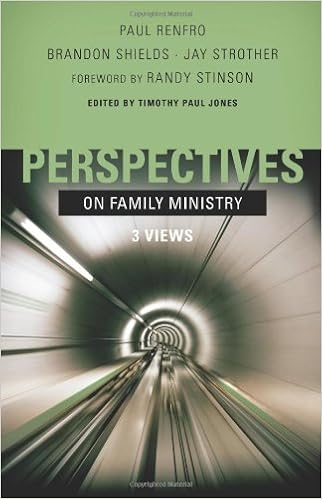
Perspectives on Family Ministry: Three Views, by Timothy Paul Jones Paul Renfro

Free Ebook Perspectives on Family Ministry: Three Views, by Timothy Paul Jones Paul Renfro
Surprisingly, Perspectives On Family Ministry: Three Views, By Timothy Paul Jones Paul Renfro that you truly wait for currently is coming. It's significant to wait for the representative and also valuable publications to read. Every book that is supplied in far better method and articulation will certainly be anticipated by lots of people. Also you are an excellent reader or otherwise, really feeling to read this book will constantly show up when you find it. However, when you really feel hard to find it as yours, just what to do? Borrow to your good friends as well as don't know when to return it to her or him.
Checking out will not provide you lots of points. Yet, checking out will certainly give exactly what you require. Every publication has specific topic and also lesson to take. It will make everybody need to pick what book they will certainly check out. It makes the lesson to take will really relate to how the individual requires. In this case, the visibility of this website will really help readers to locate many books. So, actually, there is not just the Perspectives On Family Ministry: Three Views, By Timothy Paul Jones Paul Renfro, there are still great deals of type of the books to gather.
Never question with our deal, since we will consistently give what you need. As like this updated book Perspectives On Family Ministry: Three Views, By Timothy Paul Jones Paul Renfro, you may not locate in the other area. However here, it's extremely simple. Simply click and download, you could possess the Perspectives On Family Ministry: Three Views, By Timothy Paul Jones Paul Renfro When simpleness will alleviate your life, why should take the complicated one? You could buy the soft data of the book Perspectives On Family Ministry: Three Views, By Timothy Paul Jones Paul Renfro right here and also be member of us. Besides this book Perspectives On Family Ministry: Three Views, By Timothy Paul Jones Paul Renfro, you could also find hundreds lists of the books from several resources, collections, authors, as well as authors in around the globe.
Getting this publication in this website might not lead you to walk and also most likely to book store. Seeking rack by rack will truly invest your time mainly. Yet, it well not guarantees you to be effective searching for Perspectives On Family Ministry: Three Views, By Timothy Paul Jones Paul Renfro Therefore, you could discover it in the soft file of this publication. It will give you the impressive system of the book suggestion. You can visit the web link as well as go to the page to make handle. As well as now, your book filter documents of this can be your chosen publication and also location to read this fascinating book.
About the Author
Timothy Paul Jones is assistant professor of Leadership and Church Ministry at The Southern Baptist Theological Seminary in Louisville, Kentucky. His previous books include Misquoting Truth and The Da Vinci Codebreaker. His research has also earned the Baker Book House Award for theological studies.
Read more
Product details
Series: Perspectives
Paperback: 208 pages
Publisher: B&H Academic (October 1, 2009)
Language: English
ISBN-10: 0805448454
ISBN-13: 978-0805448450
Product Dimensions:
5.5 x 0.5 x 8.5 inches
Shipping Weight: 8.8 ounces (View shipping rates and policies)
Average Customer Review:
4.6 out of 5 stars
27 customer reviews
Amazon Best Sellers Rank:
#358,519 in Books (See Top 100 in Books)
B&H’s Perspectives Series is a joy to read. Unlike other book series, their books don’t limit the discussion to theological differences in Evangelical Christianity (and there are many), but also extend the discussion to include various differences in ministry philosophy. One of their most recent books is a discussion about the ever-evolving landscape of youth ministry philosophy. Each view comes from a Baptist perspective, and each perspective has its foundation in a variety of “Youth Ministry pioneers†from previous decades. Each author builds upon this foundation.Before my brief comment on this book, I’d like to note that there has been a renaissance in the (Southern) Baptist Church as regards to Christian education the past 20-30 years. Many SBC seminaries have created a variety of doctorate degrees in Christian education, and the level of educator coming out of these schools is changing the field of Christian education, with youth ministry as a direct beneficiary. Many of these educators are choosing (called) to work as pastors in churches, focusing on youth and families, an incredible blessing. This book is yet another product of this healthy development, pushing youth ministry into a place of greater education and professional preparation. The days of hiring a student two years removed from high school are (hopefully) over. Now to the book.Timothy Paul Jones gives a great setup to the topic in the first half of the book, then the three contributors follow in part two with very lucid and encouraging essays about how youth ministry philosophy must evolve from (only) age-segregated programmatic ministry, into a much healthier, family-focused model. Some would even argue that youth ministry be absorbed into an all-encompassing, family-structured church ministry.The “Family-Integrated Model†(Renfro) finds its ministry rhythm in simplicity and family “building blocks†as the formation of the local church. It sees itself giving greater adherence to the ancient church practice of family worship and discipleship.The “Family-Based Model†(Shields) sees the current age-segregated structuring as more-or-less appropriate, but restructures it to include an intergenerational approach to ministry. I also adhere to this model myself, though before I ever read this essay(!). This model seemed most flexible and balanced (as Shields puts it) in my opinion, along with healthy engagement in culture and evangelism. This model possesses a “missional posture†as Shields puts it.The “Family-Equipping Model†(Strother) loves the Family-Based model, but feels it doesn’t go far enough, calling it a “shotgun approach†to family ministry. They keep age-segregated ministry, but restructure the entire church around the question, “How Do We Best Minister to Families?â€The FI Model would work in some select environments, such as smaller rural communities and churches with an older history of this style of discipleship. It would crush a typical church to try to switch to this. The style of ministry also seems almost militant against other forms of youth ministry, almost feeling like this is their Gospel, because it makes them so distinct.The FB Model faces the problem of over-programming (I should know, I run a ministry like this!), as it aims to integrate the home-church in intergenerational environments. This is a weakness in family ministry because it does take students away from the family more than you might want.The FE Model does have a very admirable goal of making it all about the family structure and ministering to parents to effectively disciple their students. Admittedly, the plan would take years to implement as it is a restructuring of the entire church to fit this model of ministry.Each model has strengths and weaknesses, but, as it pertains to the greatest weakness, Brandon Shields highlights how the other models fail to possess a more flexible and balanced “missional postureâ€. I would agree on this. The other models feel too insular, with both FI & FE focusing on the family unit as the building blocks of the local church. Practically speaking, it also seems that the other models prioritize discipleship over evangelism, with evangelism as a byproduct of discipleship. I believe it’s the other way around. Their ecclesiology also feels too neat, the church’s biological makeup is just a whole lot messier than this.Each article is excellent and worth the read. Each model engages with scripture well enough that one can see each paradigm is more based on ministry strategy than theology, as all pull from the same passages. While each contributor sees this working out in the local church quite differently, they all agree on the critical importance of creating and executing a family-focused ministry, a ministry that is not focused exclusively on youth, but includes youth.Youth ministry is a challenging field which requires not only a solid working knowledge of Christian doctrine, but an ability to build a workable ministry philosophy and execute it, engage/train students and families, mobilize volunteers and parents, carry out a large assortment of administrative tasks, all the while making ministry sustainable. This book is one of those very helpful tools in sustaining a life-long ministry for God’s Kingdom.
Perspectives on Family Ministry is a great introductory book to read on family ministry. In part one there is a clear introduction, historical context, and foundations for family ministry. In part two the three contributors lay out their arguments, critique and respond to the other views. In the beginning Timothy Paul Jones suggests that, “The ministry models that many ministers have studied in seminaries and inherited in local churches are fundamentally flawed. As a result, well-intended ministers have attempted to pursue task in the sole context of the church that God designed to occur first and foremost in another context. That other context is the family.†This ministry model that he speaks of is one in which parents are not seen as the primary disciple maker of their children, but rather a professionally trained minister is seen as the one who is responsible for making disciples of all the children/youth. In chapter 2 we see from Scripture that the home is to be the primary context for discipleship and the parents are expected to serve as the primary disciple-makers. In chapter 3, a clear historical context for family ministry is given in which we learn about the recent invention of the teenager and how high school and age segregation are both a recent phenomenon in America as of the 40’s and 50’s. In chapter 4 foundations are laid for family ministry in which all the contributors agree on. The definition that is given for family ministry is, “the process of intentionally and persistently realigning a congregations proclamation and practice so that parents are acknowledged, trained, and held accountable as the persons primary responsible for the discipleship of their children.†There are many other foundations for family ministry on which all three perspectives given in this book agree on. In part 2, the three perspectives, Family-Integrated Ministry, Family-Based Ministry, and Family-Equipping Ministry are represented, critiqued, and responded to.This book was very useful when I was serving at a church working with middle school students. After reading the book I decided to recommend it to a couple of the pastors that I worked with. One of the pastors, after reading it, recommended the entire pastoral team read the book and said that the first part of the book alone is worth the price. I agree with my pastor and want to say at the outset that the fact that people are discussing how to do family ministry is a very good thing. I believe that all three perspectives represented in this book are good and helpful. Each perspective does have strengths and weaknesses, and none of the three perspectives alone will make disciples of your children.As a young parent I remember reading these words and being freshly convicted and feeling the weight of my role as a parent like never before: “…such a vast and serious undertaking as a child’s discipleship is too significant to be relinquished completely to professionals. God has selected specific, ordinary people for this assignment, and these people are know as “Dad†and “Mom.†The primary formation of a child’s faith is not a job for specialist. It is a job for parents.†The reality of this sunk in, and I was and continue to be eager and grateful to be able to take on this weighty and noble task. I was convinced not just from reading this book but also from Scripture that this is indeed true. It is amazing how culture and tradition (or neo-tradition) affect how we have thought about the discipleship of our children. Being raised in a church where a clear pragmatic model for ministry was practiced, I really had no category for family ministry. I believe all of the models that are given in this book are a great alternative to the neo-traditional model of pragmatic/age segregated family ministry that we have seen practiced in many modern day churches.One critique that I have of the definition given for family ministry on page 40 in the book is the potential for a neglect of reaching and discipling the unconventional family in our church. For instance what do you do with the widow, single mom, or the spiritual orphan who comes to or visits your church? If everything in the congregation’s proclamation and practice is focused on parents being acknowledged, trained, and held accountable as the persons primary responsible for the discipleship of their children, will these people in this category not feel awkward at best? While this definition is helpful and biblical, I believe that in the messiness of real life ministry we must strive to reach those that have been and are affected by sin and the fallenness of the world we live in. My fear is that in response to the pragmatic model some would respond by placing an over emphasis on family ministry and neglect to include those that may not have a conventional family. This critique would play into my critique for the Family-Integrated model. I know this model does not seek to neglect the unconventional family (Single-Parents, etc.) The reality is that of all the models, this one is the most extreme eliminating any age segregation. In having family ministry integrated into everything couldn't this be an unnecessary stumbling block or turn off to the single mom that visits your church? For instance if you are clearly calling fathers to disciple their kids every week wouldn't a single mom unnecessarily be made uncomfortable and or reminded of the fact that she is a single mom every week? I am not saying that churches should neglect to teach clear biblical teaching (Fathers are to lead their families and disciple their kids) but I don’t see it as necessary to make that a main point in every aspect of the churches life.
Every contributor to this book is firmly convinced that parents need to fill an important role in the spiritual formation of their children. Where they differ is in how this looks like in combination with what the church is doing towards the same end. After a few chapters introducing the need to rethink the popular form of youth ministry over the last generation, they examine three different views. The family-integrated does away completely with age segregated ministries, the family-based which adds some family-friendly programming onto the traditional model and the family-equipping which attempts to both maintain age segregation and also work to equip parents to be the main spiritual influencer in their child's life.Each of these models is presented by a practitioner of it and then critiqued by the other two before responding. This helps give a quick overview of the strengths and weaknesses of each of the different models presented. While more resources would be needed to fully understand each of the views, this is a great beginning resource if you are beginning to consider what family ministry at your church should look like.
The dialogue between the different church leaders is so helpful. The conversation gives excellent perspective on how the leaders are clearly different from each other in their perspective and approach. It was encouraging to see a great deal of agreement, but eye-opening to see the differences in methodology. If we are not careful, it is our natural tendency to imagine everyone sees what we see, how we see it, and agrees on how to address what we all see. This book helped me to see a glaring problem I haven’t been seeing clearly enough. Great book.
Perspectives on Family Ministry: Three Views, by Timothy Paul Jones Paul Renfro PDF
Perspectives on Family Ministry: Three Views, by Timothy Paul Jones Paul Renfro EPub
Perspectives on Family Ministry: Three Views, by Timothy Paul Jones Paul Renfro Doc
Perspectives on Family Ministry: Three Views, by Timothy Paul Jones Paul Renfro iBooks
Perspectives on Family Ministry: Three Views, by Timothy Paul Jones Paul Renfro rtf
Perspectives on Family Ministry: Three Views, by Timothy Paul Jones Paul Renfro Mobipocket
Perspectives on Family Ministry: Three Views, by Timothy Paul Jones Paul Renfro Kindle


0 komentar:
Posting Komentar